Accessories
Why beam pattern matters in weapon-light selection
Lumens are only part of the story when choosing a weapon light. Just as important is what happens to that light once it leaves the lens.
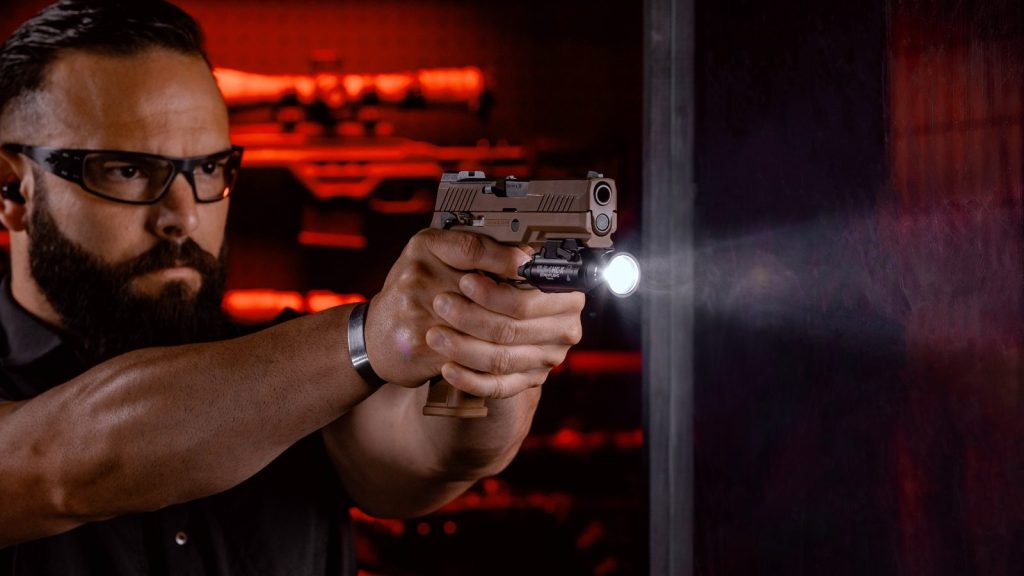
Beam pattern determines whether illumination is spread across a wider area, balanced between centre and periphery, or concentrated into a tighter beam for greater reach.
For shooters and professional users, that distinction can make a considerable difference. A light intended to illuminate a broad area at a closer range has a different job from one designed to place more usable light on a target further downrange.
An understanding of beam patterns provides a more effective starting point for selecting a weapon light than simply choosing the highest number on the specification sheet.
Looking beyond lumens
Lumens measure the total amount of light produced, but they do not describe how that light is distributed. Candela measures the highest-intensity portion of the beam, usually around its centre, while lux describes the amount of light reaching a surface or target. Considered together, these measurements help explain not only how bright a light is, but where that brightness is directed and how useful it remains at distance.
Streamlight’s weapon-mounted range includes three main beam categories: Traditional, High Lumen and High Candela. Each category is designed to provide a distinct balance of illumination, reach and situational awareness, allowing users to choose the performance profile best suited to their needs.
A Traditional beam produces a balance of lumens and candela, combining a defined centre with useful peripheral light for broad, multi-purpose use. This makes it a strong option for users who may encounter a range of distances and environments and require a versatile beam rather than one focused solely on close-range illumination or maximum reach.
The TLR-3X is one example. Its custom reflector produces a concentrated beam with optimum peripheral illumination, and delivers 500 lumens, 6,500 candela and a 161-metre beam distance.
Seeing more at close range
High Lumen patterns place the emphasis on maximum illumination at closer ranges, with a broader beam pattern and wider centre spot. This makes them particularly useful where the priority is seeing more of the immediate environment quickly, such as interior searches, vehicle interiors, hallways and other close to mid-range situations where peripheral awareness is important.
The TLR-1 HL-X demonstrates this approach. With SL-B9 rechargeable battery packs, it produces 1,500 lumens, 20,000 candela and a 283-metre beam distance. Its powerful peripheral beam helps illuminate a wider area, making it well suited to applications where users need to take in more of what is around them rather than concentrate most of the light at extended distance.
When distance matters
High Candela patterns are designed for a different priority. By concentrating more light into a tighter centre beam, they place more usable light on the target at distance. This is particularly valuable for long-distance identification, outdoor searches, rural or open-area use, long corridors and perimeter work, where the user needs to see further and with greater precision.
The TLR-1 HP-X illustrates the difference clearly. With SL-B9 batteries, it produces 1,300 lumens, 77,000 candela and a 555-metre beam distance. Although its lumen figure is lower than the TLR-1 HL-X, the considerably higher candela concentrates more light downrange and extends the beam much further. It is a useful example of why a higher lumen figure does not automatically mean greater distance performance.
Understanding usable light
Beam distance adds another useful layer to the picture. Streamlight’s engineering teams use precision measurement equipment to analyse lumens, candela, lux and spatial light distribution, then transform that data into Visual Beam Charts showing both peak intensity and the wider range of usable illumination.
Lux is important here because it describes the light that reaches a surface or target. Beam-distance measurements at 0.25 lux help show how far usable light extends, rather than focusing only on the brightest part of the beam.
Matching the light to the task
There is no single beam pattern that is right for every user or every environment. High Lumen patterns favour broad, immediate illumination and situational awareness, making them particularly valuable when the surrounding area is as important as the centre of the beam. High Candela patterns prioritise reach, precision and light on target at distance, making them better suited to applications where identifying what is further ahead is the priority. Traditional beams sit between those approaches, providing a versatile balance for wider-ranging use.
Weapon-light selection should begin with the task. Lumens remain important, but candela, lux and beam shape show how that output will perform. The best choice is not simply the brightest light on paper, but the beam pattern that puts the right amount of light in the right place for the job at hand.
Related articles
Streamlight launches ProTac Rail Mount HL-X Pro – Streamlight’s ProTac Rail Mount HL-X Pro weapon light.
Streamlight releases the ultra-thin Wedge SL – Streamlight’s ultra-thin everyday-carry light.
Streamlight continues to revolutionise the market in hands-free lighting solutions with the new SL-SideSaddle – Streamlight’s hands-free lighting launch.
Lighting the way – Streamlight’s legacy of innovation and excellence – A look back at how Streamlight built its business.