Features
Doing business with Japan
Japan’s strict ownership rules keep civilian sales narrow, but defence modernisation and advanced manufacturing are opening serious opportunities for suppliers who can meet Japanese standards.

Market overview
Japan’s firearms economy has two very different faces. The first is a tightly controlled civilian market in which private ownership is permitted only for specified sporting, hunting and occupational purposes, and where pistols are effectively outside the legitimate consumer trade. The second is a sophisticated industrial and defence environment, built on precision engineering, materials science, machine tools, electronics and quality systems that are respected around the world. For an overseas manufacturer, confusing the two is the quickest route to an unproductive market-entry plan.
The civilian side is small by international standards, but it is not insignificant. Shotguns and air rifles support hunting, target disciplines and clay shooting, while a specialist retail and range network serves owners who are accustomed to extensive training, careful storage and police supervision. In 2025 the Japanese Diet heard that the country had around 75,000 shotgun possession permit holders. That number describes a narrow, mature customer base rather than a mass retail opportunity, but it is a useful one for brands whose product is genuinely suited to its needs.
The larger commercial story lies in Japan’s ability to manufacture and integrate complex products. The country has long supplied high-precision components, optical systems, coatings, production machinery, polymers, electronics and test equipment to global industries. In defence, companies such as Mitsubishi Heavy Industries, Kawasaki Heavy Industries, IHI, NEC, Fujitsu, Komatsu and Howa operate inside programmes spanning aircraft, missiles, ships, vehicles, communications, sensors and small arms. The resulting supply chain is deep, exacting and relationship-driven.
Japan is also in the middle of a major security shift. Its 2022 strategic documents set a course for fundamental reinforcement of defence capability, including a target of spending around 2% of GDP by FY2027. The government’s FY2026 defence budget proposal exceeded ¥9 trillion, continuing a multi-year expansion that is reshaping procurement priorities. Small arms are only one part of that effort, but the demand generated by logistics, training, optics, sensors, protective equipment, maintenance and resilient production capacity reaches far beyond any single weapon platform.
For foreign firms, Japan is therefore best approached as a high-value partnership market. It rewards a clear technology advantage, patient local representation and a willingness to adapt products, documentation and support to Japanese requirements. It is less receptive to speculative consumer imports or a short-term sales push.
Firearms regulation and market access
The Firearms and Swords Control Law begins from a prohibition: no person may possess firearms, swords or certain other weapons unless a statutory exception and permission apply. In practice, civilians may obtain authorisation for limited categories such as shotguns, air rifles and designated hunting or target-shooting activities. Handguns, military-style firearms and most centre-fire rifles are not part of an ordinary civilian retail market. Crossbows are regulated as well.
A prospective owner must satisfy a demanding process overseen by the relevant prefectural Public Safety Commission. The route normally includes a safety lecture, written examination, practical instruction, medical and background checks, secure-storage inspection and police interviews. Permits are tied to the individual and the purpose. Ammunition purchases, storage and use are controlled, and licence renewals, checks and record-keeping are integral rather than incidental features of ownership.
This has practical implications for every overseas supplier. Importation is not simply a customs exercise; product classification, authorisation, dealer eligibility, Japanese-language documentation and the downstream customer’s permission all matter. Japan Customs identifies firearms, ammunition and pistol parts among goods subject to tight controls, while the law separately restricts possession and importation. A capable local partner will understand the division of responsibility among police, customs, prefectural authorities and the trade.
The sensible route is to work through an established Japanese importer or distributor with compliance capability, service technicians and access to the relevant shooting or hunting networks. They should be able to advise before goods are shipped, rather than attempting to solve approval questions after arrival. Brands should expect close scrutiny of markings, manuals, spare-part availability, safe-use information and any claim made in promotional material.
Hunting, clay and airgun demand
Hunting is the principal private-market driver for shotguns and air rifles. Japan’s ageing population of hunters has become a wildlife-management issue in its own right: wild boar, deer and bears have damaged crops and entered communities in many regions, while rural areas need trained, lawful hunters and professional capture personnel. Government programmes encourage training and capacity, including the development of people able to conduct specialised wildlife-control work. This creates a practical demand for durable, field-ready equipment rather than fashion-led consumption.
The typical opportunity is in quality shotguns, air rifles, ammunition compatible with lawful use, optics, hearing protection, clothing, safes, cases and maintenance products. Local terrain and weather matter. Products must withstand rain, humidity, steep ground and long travel, while users will value reliability, secure carry systems and low-maintenance finishes. A company that can help a dealer explain responsible use, cleaning and storage has a stronger proposition than one selling a catalogue alone.
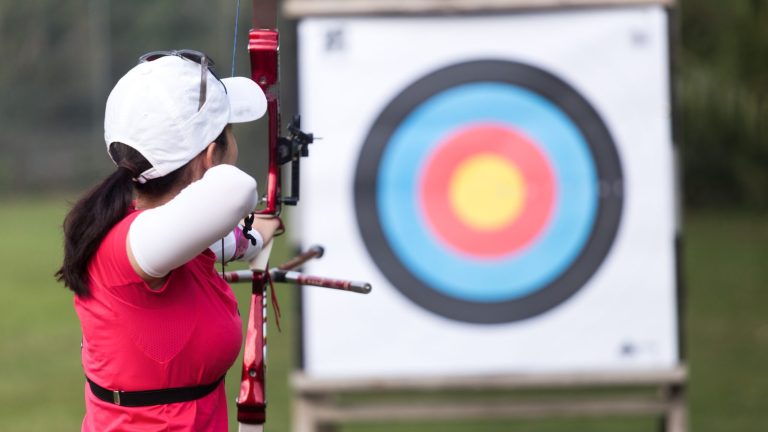
Clay target shooting has a separate identity, with trap and skeet disciplines, established clubs and experienced shooters. Japan also has strong airgun traditions, including Olympic and junior pathways. These communities can support premium accessories, shooting clothing, recoil-management products, competition-grade optics and ammunition, but the buyer is informed and the volume modest. Demonstration, service and club relationships are more persuasive than a broad consumer advertising campaign.
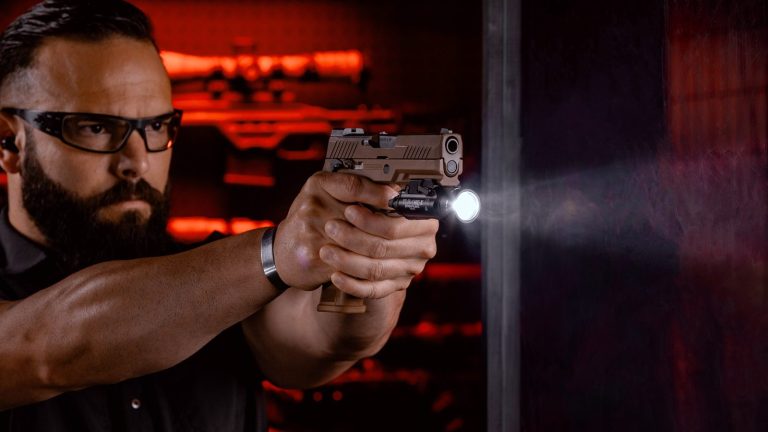
There is no equivalent of a large personal-protection handgun segment. That absence changes the accessories market too: holsters, carry optics and defensive-training products do not have the same civilian base they would in North America or parts of Europe. Overseas firms should not mistake Japan’s general consumer affluence for demand in categories that regulation and social practice make largely irrelevant.
Defence and law-enforcement demand
Japan’s defence expansion is the strategic opportunity. The Japan Self-Defense Forces are strengthening standoff capability, air and missile defence, maritime resilience, logistics, space, cyber and uncrewed systems. This is a national industrial programme as much as a purchasing cycle. The government has introduced measures to reinforce the defence production and technology base, seeking to secure suppliers, sustain production lines and address fragile single-source capabilities.
In small arms, Howa Machinery remains the name every entrant should understand. Howa developed the Type 64 rifle, adopted by the former Japan Defense Agency, and later produced the Type 89 and Type 20 5.56mm rifles for the Ground Self-Defense Force. Its history illustrates the character of Japanese defence manufacturing: long programme horizons, strict domestic requirements and a premium on dependable production rather than rapid catalogue turnover.
The opportunity for foreign companies is usually not to displace an established prime with a finished rifle. It is more often in a defined subsystem or industrial capability: advanced optics, electro-optical sights, lasers, thermal imaging, sensors, suppressors where lawful and specified, protective equipment, rugged cases, modular furniture, barrels, coatings, precision tooling, inspection equipment, training systems, digital maintenance tools and automation. Products must be technically excellent, supportable and suitable for formal procurement.
Japan’s policy on defence-equipment transfers has evolved as regional conditions have deteriorated. The Three Principles on Transfer of Defense Equipment and Technology and their implementation guidelines remain central to the framework, and the government revised them again in 2026. The direction is toward more practical international cooperation and industrial resilience, but each transfer remains subject to policy, legal and security review. Suppliers should treat export-control advice, end-use control and data security as core commercial workstreams.
Opportunities for international brands
The strongest proposition combines a defined performance advantage with a credible Japanese support model. Optical and sensor companies can find openings where local primes need technology that is proven in difficult environments. Manufacturers of high-end machine tools, metrology, automated inspection, test fixtures and secure production software may be equally relevant, particularly where Japanese companies seek additional capacity without compromising quality. The sale may be indirect, through a Tier 1 or Tier 2 supplier, rather than a direct tender to the Ministry of Defense.
A second opportunity is co-development. Japanese companies are adept at adapting strong engineering to an exact customer requirement, and government programmes increasingly value industrial security and continuity of supply. A foreign company prepared to share engineering effort, offer a local service pathway and commit to a multi-year relationship can be more attractive than an exporter offering a finished product only. The commercial conversation should include lifecycle support, technical data, spares, training and repair from the outset.
Civilian brands should aim even more narrowly. Premium sporting shotguns, target accessories, airgun products, field optics, storage, hearing protection and specialist hunting equipment can work when they complement established Japanese channels. Japanese consumers often reward craftsmanship and fit-and-finish, but they also expect the importer to hold parts and honour warranty commitments. Long lead times or vague answers to a technical query will quickly undermine confidence.
Localisation may mean Japanese manuals and websites, but it can extend further: domestic final assembly, inspections, training, repair capability or a stocking arrangement for critical parts. That investment can distinguish a serious partner from an opportunistic exporter. It is especially valuable in public-sector work, where resilience, security of supply and the ability to respond locally can carry real weight.
Manufacturer in focus: Howa Machinery
Howa Machinery is the clearest domestic name in Japanese small arms. Based in Aichi Prefecture, the company combines firearms with industrial machinery and other manufacturing activities. Its firearms history reaches back to the post-war period and includes the Type 64, Type 89 and Type 20 service-rifle line. The company also produces sporting rifles known internationally under the Howa brand, including actions used by overseas partners and rifle builders.
Howa matters not simply because it produces rifles, but because it sits at the intersection of domestic defence requirements and export-facing sporting manufacture. The two businesses demand different product strategies, yet both rely on machining discipline, controlled processes and a capacity to build consistent components at scale. For suppliers, that can create openings in barrels, tooling, coatings, measurement, materials and production technology – but only where performance, traceability and delivery confidence are demonstrable.
The company’s record also offers a reminder for foreign entrants. Service-rifle business is tied to national requirements and long-term support. Any proposal must make sense within the wider Japanese industrial and security framework. A partner who adds manufacturing resilience or a clearly superior subsystem is more likely to be heard than one proposing a cosmetic variation on an existing product.
Show business
DSEI Japan, Chiba
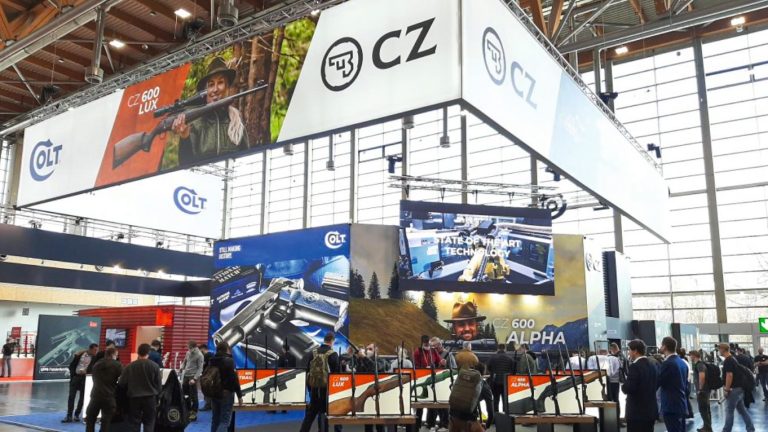
DSEI Japan has become the country’s most useful international defence and security exhibition. The 2027 edition is scheduled for 28 to 30 April at Makuhari Messe, Chiba. It brings together government, Self-Defense Forces representatives, prime contractors, overseas delegations and technology suppliers. For companies working in defence equipment, subsystems, security or dual-use manufacturing, it is a better route to serious meetings than a consumer-focused event.
Japan’s hunting and sports shooting community
Japan’s civilian shooting trade is better approached through its specialist clubs, ranges, dealers and associations than through a single giant consumer show. A visiting brand should use a trusted importer to identify the relevant prefectural networks, arrange controlled demonstrations where appropriate and meet the people who train and support lawful owners. The market is compact, but personal credibility travels quickly inside it.
Japan fact file
Capital: Tokyo
Dialling code: +81
Population: approximately 123 million (2025 census preliminary count)
Currency: Japanese yen (JPY)
Head of state: Emperor Naruhito
Head of government: Prime Minister Sanae Takaichi
Official language: Japanese
Time zone: JST (UTC+9)
Alliances: G7 member; US treaty ally
GDP (nominal): approximately US$4.2 trillion
GDP per capita (nominal): approximately US$34,000
Key industrial strengths: automotive, machinery, robotics, electronics, precision manufacturing, chemicals, aerospace and defence
Goods exports: approximately ¥110.4 trillion (2025)
Key export markets: United States, China, South Korea, Taiwan and Hong Kong
Related articles
Doing business with the Czech Republic – The November country report, covering a very different European market.
Helsing partners with Rakuten as Japan tests HX-2 strike drone – Japan’s defence ministry tests an uncrewed strike drone with a European partner.
Spotlight on rifles: inside the global rifle market – How the international rifle trade is shaping up, from sporting to service rifles.
Guide to Enforce Tac 2026: Europe’s security and defence industry gathers in Nuremberg – Where Europe’s security and defence suppliers meet each year.