Features
Doing business with the Czech Republic
From globally recognised pistols and service rifles to ammunition, optics and specialist competition guns, the Czech Republic combines one of Europe’s strongest firearms traditions with a fast-expanding defence sector, an active civilian market and an export culture that reaches far beyond its borders.
Market overview
The Czech Republic has one of Europe’s most distinctive and respected firearms industries. Led by internationally prominent businesses such as Colt CZ Group and Czechoslovak Group (CSG), the sector combines generations of expertise in firearms, ammunition and military engineering with modern manufacturing, sustained investment and global reach. Czech companies now compete across sporting and service firearms, ammunition, optics, competition guns, energetic materials and the machinery and components supporting the wider supply chain.
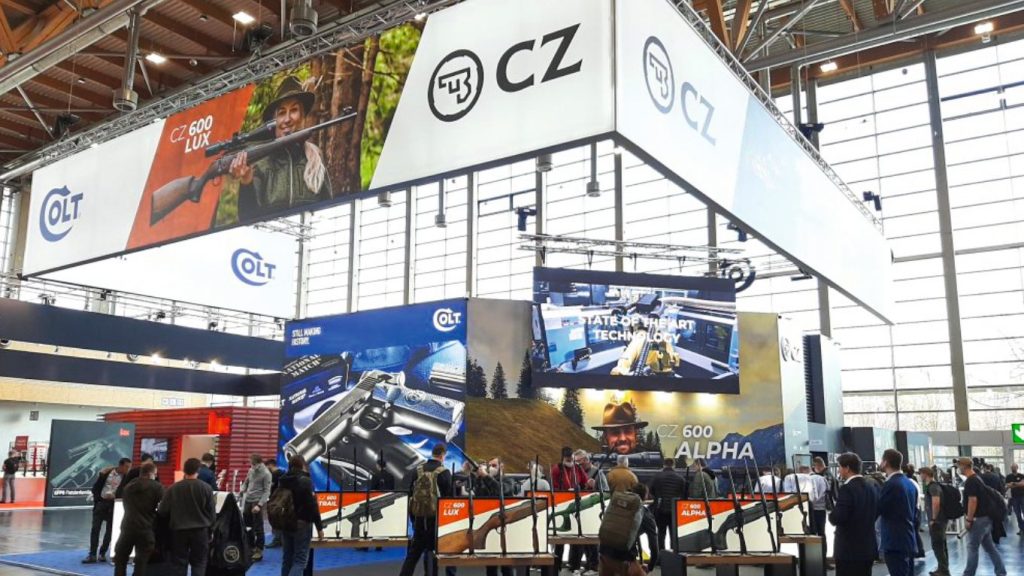
At the centre is Colt CZ Group, the Prague-headquartered business built around Česká zbrojovka in Uherský Brod. Its ownership of Colt, Colt Canada, Dan Wesson and Sellier & Bellot has transformed a famous national manufacturer into a vertically integrated international group. In 2025 Colt CZ generated revenue of CZK 23.4 billion, sold 578,491 firearms and recorded particularly strong growth in ammunition. Those figures show the scale that Czech capital and management now command, even when much of a group’s production and sales take place abroad.
This export orientation is fundamental. The Czech Ministry of Industry and Trade said in 2026 that approximately 90 per cent of Czech defence-sector production is exported. Official data for 2024 recorded realised military-material exports worth CZK 90.96 billion, up 53.7 per cent year on year. Civilian small arms and ammunition exports outside the EU were worth CZK 5.53 billion, with a further CZK 1.04 billion moved to EU markets under transfer permits. These categories extend beyond firearms alone, but they demonstrate the size and international reach of the environment in which Czech gunmakers operate.
For an overseas company, the Czech Republic therefore offers two opportunities. It is a worthwhile end market in its own right, with an experienced trade and a technically informed customer base. More importantly, it is a production and partnership hub positioned inside the EU and NATO, close to Germany, Poland, Austria and Slovakia, and linked to procurement and distribution networks across Central and Eastern Europe.
Firearms regulation and market access
The Czech civilian market entered a new regulatory era on 1 January 2026, when Act No. 90/2024 on Weapons and Ammunition replaced the previous 2002 law. The reform retained legal civilian ownership while modernising categories and administration. Firearms are now divided into registration categories R1 to R4, notification category PO and non-notification category NO, with the strictest controls applied to R1 and R2. Individual authorisations, business licences and registered firearms are recorded electronically in the Central Firearms Register rather than proved primarily through physical licence cards.
Applicants must meet age, health, legal-reliability and professional-competence requirements, including an examination. The system recognises ordinary and extended firearms authorisations, with the latter covering activities including carrying for personal protection. Lawful concealed carry has long formed a visible part of Czech firearms culture, although it remains regulated and subject to eligibility checks.
Police data show the depth of the legal market. At the end of 2025 there were 324,623 firearms-licence holders and 1,075,543 registered firearms in their possession. More than 268,000 people held the former category E authorisation for protection of life, health or property, while substantial numbers also held permissions connected with sport, hunting and collecting. Categories overlap, but the figures underline that Czech demand is not confined to one activity.
Dealers and manufacturers require the appropriate Czech business authorisation and must enter relevant transactions and stock movements in the Central Firearms Register. Products must meet applicable technical, marking and proof requirements, with the Czech Proof House playing a central role. EU rules govern intra-European transfers; exports to third countries require additional authorisation. Military material is controlled separately under Act No. 38/1994 through permission to trade and transaction-specific licensing.
For foreign brands, a competent importer is therefore indispensable. The best partners do more than clear goods through customs: they manage proofing and classification, maintain register compliance, hold spares, communicate in Czech, train dealers and understand which products can be promoted to hunters, sporting shooters, protection-oriented customers or public buyers. Regulation is transparent, but it rewards preparation.
Hunting, sport and personal protection
The Czech civilian market is more varied than its international image sometimes suggests. Hunting remains important, supported by an extensive network of hunting associations and a landscape that includes forests, farmland and managed game estates. Wild boar, roe deer and red deer sustain demand for bolt-action rifles, driven-hunt optics, expanding ammunition, suppressors, thermal equipment, durable clothing and gun-care products.
Sport shooting is equally influential. Czech competitors have a strong presence in practical pistol, rifle and shotgun disciplines, precision shooting, clay sports and Olympic events. Clubs and commercial ranges provide a route into the sport, while a busy match calendar gives manufacturers opportunities to demonstrate products under demanding conditions. The domestic success of CZ’s Shadow and Tactical Sports pistol families reflects this culture, as does the appearance of high-value specialists such as Laugo Arms and its low-bore-axis Alien competition pistol.
Personal protection adds another commercial layer. The high number of protection authorisations supports demand for pistols, holsters, weapon lights, red-dot sights, training ammunition, safes and instruction. Buyers often want proven reliability and local service rather than novelty. Retailers offering range testing, optics installation and training have an advantage over sellers competing only on price.
Collecting is also significant. Czechoslovak military arms sustain demand for original accessories, reproduction parts and newly manufactured interpretations. Czech Small Arms, for example, still makes new vz. 58-pattern rifles and vz. 61-pattern pistols in several civilian calibres. The mix of defensive ownership, sport, hunting and heritage makes this a broad market for a country of fewer than 11 million people.
Defence and law-enforcement demand
Russia’s invasion of Ukraine and the wider rearmament of Europe have accelerated a defence industry that was already export-led. Czech companies benefit from a national policy emphasis on industrial capability, NATO interoperability and support for Ukraine, while Prague has become an active broker of international defence cooperation. Demand extends from ammunition and small arms to vehicles, radar, protective equipment and battlefield electronics.
For the firearms sector, the Czech Army is both a customer and an export reference. Over the past 15 years the Ministry of Defence has contracted for tens of thousands of Czech-made weapons as the armed forces moved to NATO-standard individual armament. A framework agreement announced in 2025, valued at up to CZK 4.26 billion before VAT and running to 2031, covers CZ BREN 2 rifles, CZ P-10 C pistols, 40mm under-barrel grenade launchers, optoelectronic sights, spares and armourer support. That package illustrates the modern opportunity: buyers increasingly seek an integrated capability, not a bare firearm.
The export story is moving in the same direction. Licensed assembly of the CZ BREN 2 has been established in Ukraine, while a Czech–Montenegrin government project announced in July 2026 brings together CZ BREN 3 rifles, pistols, sniper rifles, submachine guns, Sellier & Bellot ammunition and 4M Systems accessories. For suppliers of optics, mounts, night vision, suppressors, magazines, cases, cleaning systems, training tools and production technology, Czech prime contractors can be gateways to programmes far beyond the domestic market.
Large groups amplify that reach. CSG has become a global ammunition power, while STV Group combines Czech small- and large-calibre ammunition production with explosives, military vehicles, AK-pattern firearms and tactical equipment. Both show how the sector increasingly competes through scale, vertical integration and complete-system offers.
Opportunities for international brands
The most attractive opening is often as a technology or component partner rather than another generalist consumer brand. Czech manufacturers need reliable sources of barrels, springs, magazines, advanced polymers, coatings, tooling, metrology, automation, propellants and packaging. Defence programmes create additional demand for ruggedised optics, lasers, thermal systems, suppressors, signature-management products, communications integration and test equipment. Suppliers that can meet NATO quality expectations and provide secure long-term capacity will find a receptive audience.
The civilian channel offers opportunities too, especially where imported products complement rather than duplicate strong local ranges. Premium hunting optics, thermal imagers, specialist shotgun products, reloading equipment, competition accessories, secure storage, hearing protection and high-quality outdoor clothing can all find buyers. In handguns and sporting rifles, however, an overseas brand must have a clear technical proposition because CZ and other domestic makers enjoy formidable recognition.
Localisation is increasingly important. Public-sector buyers frequently examine security of supply, domestic value creation, maintenance capacity and technology transfer. A foreign company able to assemble, service or co-develop products in the Czech Republic may be better placed than one offering finished imports alone. The country’s skilled workforce, industrial universities and central location make joint ventures and supplier agreements realistic, although competition for engineers and production staff is intense.
After-sales support should be treated as part of the product. Czech customers expect spare magazines, wearing parts, warranty work and technical answers to be available without long delays. Dealer education, Czech-language material and a visible presence at ranges, competitions and trade fairs build confidence. For defence business, lifecycle support, training, data rights and predictable component availability may matter as much as the initial unit price.
Challenges
The Czech Republic is accessible, but it is not an easy market. Domestic firearms and ammunition brands are strong, distributors are technically experienced and customers can compare imported products with respected locally made alternatives. A weak importer or an inconsistent supply chain can damage a brand quickly.
Regulatory detail is another hurdle. Classification, proofing, register entries, export controls and end-user documentation must be correct, while military opportunities can require security clearances and long tender cycles. Companies also face exchange-rate exposure because the Czech koruna remains outside the euro, as well as wage pressure, energy costs and competition for skilled labour.
Finally, the defence boom brings capacity risk. Orders are large and urgent, but investments in machinery and staff must outlast the current cycle. Successful entrants will distinguish between durable European rearmament, temporary bottlenecks and programmes dependent on political decisions. The best approach is long-term: establish a reliable partner, solve a defined capability gap and build service capacity before chasing volume.
Manufacturer in focus: Colt CZ Group
Colt CZ Group is the clearest expression of the Czech industry’s transformation. Its manufacturing heart remains Česká zbrojovka at Uherský Brod, established in 1936 and now exporting CZ products to more than 90 countries. The company spans commercial pistols and rifles, military and police firearms, precision and competition products, with internationally recognised families including the CZ 75, Shadow 2, P-10, Scorpion, BREN 2 and BREN 3.
The acquisition of Colt in 2021 gave the group an iconic American brand and a substantial North American position. Sellier & Bellot followed in May 2024, adding a 200-year-old Czech ammunition manufacturer and making ammunition a second major earnings pillar. The group has since expanded into accessories, optics, tactical equipment and energetic materials, including a controlling interest in Synthesia Nitrocellulose completed in 2026.
This breadth changes how Colt CZ can compete. It can combine firearms, ammunition, optics, mounts, tactical equipment and support in a single proposal, while manufacturing across multiple countries. In 2025 the firearms division generated CZK 12.1 billion and the ammunition division CZK 11.3 billion. Commercial demand in the United States weakened, but CZ-branded sales increased and military, law-enforcement and ammunition activity provided balance.
For potential suppliers and distributors, Colt CZ is both a formidable competitor and a significant partner. Its scale creates opportunities in components, advanced manufacturing and regional representation, but expectations on quality, traceability, delivery and compliance are high. The group’s trajectory also sets the tone for the wider sector: Czech firearms companies no longer see themselves as regional producers, but as consolidators and prime contractors with global ambitions.
Manufacturer in focus: Czechoslovak Group
CSG is the other Czech-controlled group that must be understood when assessing the country’s firearms and defence economy. Owned and chaired by Michal Strnad, it has expanded from a Central European industrial base into an international group spanning ammunition, military vehicles, radar, aerospace and advanced defence systems. Its scale gives Czech industry access to capital, production capacity and markets far beyond the domestic economy.
Firearms-market relevance lies chiefly in CSG Ammo+. Fiocchi Group brings Fiocchi Munizioni, Baschieri & Pellagri and Britain’s Lyalvale Express, covering hunting, clay, competition and professional ammunition. The 2024 acquisition of the US-based Kinetic Group added Federal, Remington Ammunition, CCI, Speer and HEVI-Shot, giving CSG a major position in the world’s largest commercial shooting market and a broad portfolio spanning rimfire, centrefire, shotshell, components and law-enforcement products.
CSG’s significance is wider than branded cartridges. Through European businesses including MSM Group and FM Granada, it participates in medium- and large-calibre ammunition, explosives, components, life-extension work and disposal, while investments in nitrocellulose infrastructure strengthen control over critical inputs. For prospective partners, this creates openings in machinery, energetic materials, packaging, testing, components and capacity expansion – but also introduces a powerful competitor with the resources to acquire technology and consolidate supply chains internationally.
Ammunition strength: Sellier & Bellot and STV
Founded in Prague in 1825 and now based in Vlašim, Sellier & Bellot is one of the world’s oldest continuously operating ammunition brands. Its portfolio covers pistol and revolver cartridges, rifle ammunition, shotgun shells, rimfire products and specialist military and law-enforcement loads. The brand’s broad calibre range and value-to-performance reputation give it strong positions in both volume commercial sales and professional supply.
Its integration into Colt CZ creates obvious advantages: shared international channels, bundled tenders and closer alignment between firearms and ammunition development. A five-year propellant agreement signed with Eurenco in 2025 also showed the strategic importance of securing energetic-material supplies. For the trade, Sellier & Bellot remains a key Czech export brand while becoming part of a more vertically integrated system.
STV Technology has created a second important domestic small-calibre production base at Polička. Its Scorpio range includes 9mm Luger and .223 Remington/5.56×45 products for commercial and military standards, manufactured on modern European equipment. Parent STV Group’s broader investment in explosives and large-calibre ammunition gives it purchasing power, defence relationships and an ability to respond to demand across several ammunition classes.
Optics and specialist innovators
Meopta gives the Czech sector an optical capability few firearms-producing countries can match domestically. Founded in 1933 and headquartered in Přerov, the company develops and manufactures sporting optics, precision optomechanical systems and military products. Its defence work includes riflescopes, red-dot sights, night-vision devices, rangefinding and observation systems, as well as optical subsystems for armoured vehicles and other platforms. Its importance lies not only in the Meopta brand but in its ability to perform research, coating, machining, assembly and testing for international OEM customers.
Beneath the largest manufacturers is a lively specialist scene. Laugo Arms hand-builds the unconventional Alien pistol for premium competition customers. FK Brno develops high-performance sporting pistols and proprietary ammunition concepts. Perun Arms produces AR-15-pattern rifles and components, while Czech Small Arms keeps the vz. 58 and vz. 61 lineages alive with newly manufactured civilian models. These businesses are smaller, but they reinforce the country’s reputation for solving engineering problems in original ways.
For overseas partners, this tier can be especially interesting. Smaller manufacturers may be open to distribution, co-development, OEM work or specialised component relationships that would be difficult to establish with a global group. They also provide early evidence of market trends: demand for optics-ready systems, configurable rifles, premium competition engineering and niche calibres often appears here before it reaches larger-volume catalogues.
Show business
Future Forces Exhibition & Forum, Prague
Held at PVA Expo Prague from 21–23 October 2026, Future Forces combines a defence and security exhibition with NATO working groups, expert conferences and government delegations. Organisers expect more than 400 exhibitors and 9,000 participants from over 70 countries. For companies targeting military, police or integrated soldier-system business, it offers access to procurement officials, prime contractors and technology partners rather than a purely consumer audience.
IDET, Brno
The next IDET International Defence and Security Technologies Fair takes place at the Brno Exhibition Centre from 26–28 May 2027. The biennial show is one of Central Europe’s principal defence-industry meetings. Its 2025 edition, held alongside the PYROS and ISET security fairs, brought the combined events more than 650 exhibiting companies from 35 countries and over 35,000 visitors. IDET is an important platform for product launches, industrial partnerships and meetings with Czech and international delegations.
Fact file
- Capital: Prague
- Dialling code: +420
- Population: approximately 10.9 million
- Currency: Czech koruna (CZK)
- Head of state: President Petr Pavel
- Prime Minister: Andrej Babiš
- Official language: Czech
- Time zone: CET (UTC+1); CEST (UTC+2) during daylight saving time
Economy in focus
- Currency: Czech koruna
- GDP (nominal): approximately US$389 billion
- GDP (nominal) per capita: approximately US$35,660
- GDP growth rate: 2.6% (2025)
- Unemployment rate: approximately 2.8% (2025)
- Top export partners: Germany, Slovakia, Poland, France and Austria
- Top import partners: Germany, China, Poland, Slovakia and Italy
Related articles
CSG reports strong 2025 growth following IPO and major contract wins – Defence demand lifts the Czech group’s first results since listing.
Colt CZ Group buys Sellier & Bellot – The Czech group adds a major ammunition portfolio.
Highlander Group appoints SH COMMERCE as distributor in Czech Republic – A Scottish brand extends its reach into Central Europe.