Features
Weihrauch HW30S: why a German entry-level springer still earns reviews and shelf space worldwide
A fresh UK review of Weihrauch’s HW30S, the rifle Americans know as the Beeman R7, records 15mm groups at 20m from a design whose trigger dates back more than 60 years. For the global trade it is a case study in how a family-owned German maker keeps an old product current
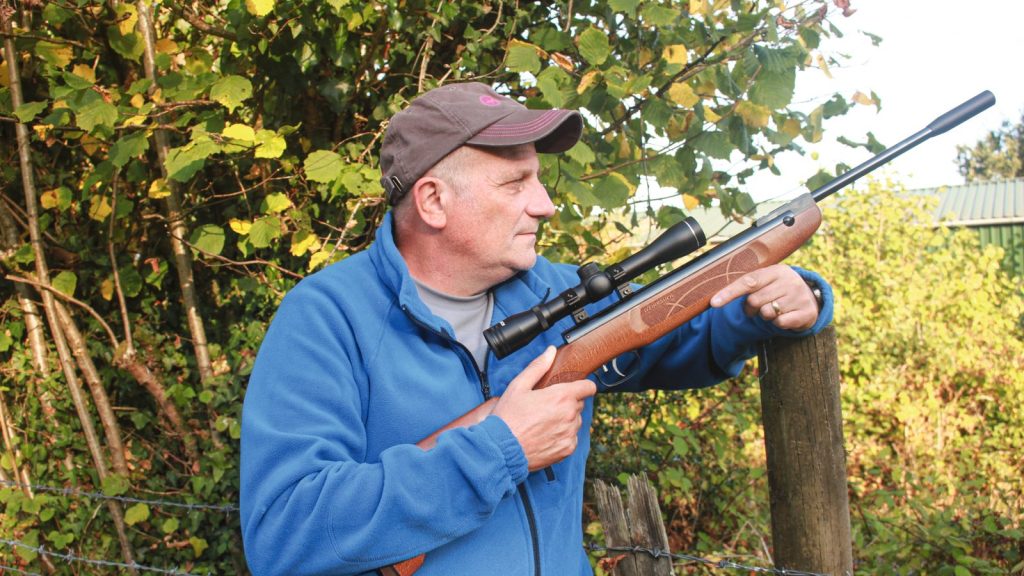
A German entry-level spring rifle that has sat in international catalogues for decades has picked up a warm independent review in the UK, and the reasons the reviewer gives are the same ones that have kept it on shelves from Bavaria to the United States. Writing in Airgun World, Pete Evans tested the Weihrauch HW30S kit and concluded that a rifle marketed at young shooters performs like its full-size stablemates.
For the international trade the interest is less in one review than in what it says about product longevity. Weihrauch & Weihrauch Sport GmbH & Co. KG of Mellrichstadt, Bavaria, traces its origins to 1899, when Hermann Weihrauch, in the company’s own words, “laid the cornerstone in Zella St. Blasii”, and restarted in Mellrichstadt in 1948. It describes itself today as “an internationally active family-owned business run by the fifth generation” whose products “are in demand worldwide”. The HW30S is one of the clearest examples of how that demand has been sustained.
What did the UK review measure?
Evans tested a .177 fitted with the Weihrauch-branded 4×32 scope supplied in the kit. Over the chronograph, JSB Exact RS pellets of 7.33gr averaged 8.1ft/lb, JSB Exact at 8.44gr gave 7.8ft/lb and JSB Exact Heavy at 10.34gr gave 7.2ft/lb. The rifle weighed 2.6kg scoped, measured 98.5cm overall and carried a 39.9cm barrel.
“Five-shot groups of 15mm were achieved,” he wrote of his 20m testing in still conditions. “Pushing out to 25m opened up the groups slightly, but still within 18mm.” At 30m he reported “similar favourable results” on 1in spinners. His explanation: “I am convinced that the synergy of the benign firing cycle of this gun, coupled with the excellent trigger, gives this impressive performance.”
The factory’s own specification for the current HW 30 S lists a weight of 2.50kg, an overall length of 985mm and a 395mm barrel, with quoted velocities of 190m/s in .177 and 145m/s in .22, and describes the rifle as “a superior, light and well-balanced air rifle of excellent accuracy for the whole family”. Evans reached the same conclusion from the other direction: “This gun is a true all-rounder which can be enjoyed by families of all ages.”
How does one German rifle travel under two names?
The HW30S is the rifle that United States shooters have known for more than 40 years as the Beeman R7. Pyramyd Air’s airgun writer Tom Gaylord put the question directly in a 2023 history of the model: “Is the Beeman R7 a Weihrauch HW 30S with a different stock? Yes, it is.” He records that “the year after the R1 came out the Beeman R7 and R8 hit the market. They were Beeman versions of the HW 30S and 50S, respectively,” and reproduces the R7’s appearance in Beeman’s autumn 1982 catalogue. Beeman’s practice, Gaylord notes, was to make its versions stand apart with longer fore-ends and custom stocks.
The supply chain behind the current UK rifle is just as international. “Many top manufacturers are turning to Minelli of Italy to make their stocks, and the HW30 is no exception,” Evans wrote of the ambidextrous walnut-stained beech stock with its chequered panels and trademark Weihrauch butt pad. In the UK, Hull Cartridge describes itself as the official importer of Weihrauch airguns since 1977 and stamps the barrels of the guns it brings in to confirm factory-approved warranty cover. A German action, an Italian stock, a British importer of 49 years’ standing and an American brand name on the same design is a distribution story few entry-level products can tell.
Why does a design of this age still earn reviews and shelf space?
Evans’s answer rests on two components that have barely changed. “The Rekord unit is the benchmark for all spring gun triggers and has been for the last 60-plus years,” he wrote of the two-stage adjustable trigger, and of the shot cycle: “There is very little movement on discharge, save for some mechanical noise; there really isn’t much to let you know the shot has been taken.”
The second answer is positioning. Evans noted that “the majority of readers fall into the middle-age bracket” and that “Attracting youngsters to the sport in recent years has become a hurdle.” His view was that a youngster’s gun “should be a scaled version of the adult design”, and the HW30S is his example of a maker getting that right: “This HW30 is a rare thing, inasmuch as it’s marketed as a starter gun, but its build quality and performance match that of its full-size peers.” A product that recruits the next generation without alienating the parent is a product every market needs, which is why a 1982 catalogue entry and a 2026 review can describe the same rifle in the same terms.
There is also a small lesson in range management. The HW30S kit has “no provision for open sights” and relies on the supplied scope, while the sister HW30SF “comes with a set of open sights”. Evans noted that the barrel and breech block share the larger HW99’s 15mm diameter, although the parts are not interchangeable. Two variants, two calibres and a shared component logic across the family keep an old design cheap to build and easy to stock.
What happens next
Evans has not finished with the rifle. He wrote that he was taking it to “a social evening at a friend’s house, where there will be people from a wide age group”, and closed: “Following the gathering, I’m going to be servicing the gun and implementing any special measures that will enhance its performance. Hopefully that gives you something to look forward to next month.” A second feature is therefore due in Airgun World.
For the wider trade, the HW 30 S remains listed in Weihrauch’s current spring-piston break-barrel range, and the company marked 125 years in business at IWA OutdoorClassics in 2024, a year after the fifth generation of the family entered the firm. The review is a reminder that a manufacturer’s longest-serving designs can still generate fresh editorial, fresh consumer interest and fresh distributor orders in more than one market at once.
Useful links
Airgun World – Pete Evans’s original review, Weihrauch HW30S review: a starter rifle that isn’t only for starters
Weihrauch Sport – the manufacturer’s HW 30 S product page
Hull Cartridge – official UK importer of Weihrauch airguns since 1977
Pyramyd Air – Tom Gaylord’s history of the Beeman R7, the HW30S in the United States
Frequently asked questions
Is the Beeman R7 the same rifle as the Weihrauch HW30S?
Yes. The Beeman R7 is the Weihrauch HW30S sold in the United States under the Beeman name with a different stock; it first appeared in Beeman’s 1982 catalogue, a year after the R1, according to Pyramyd Air’s history of the model.
Where is the Weihrauch HW30S made?
The HW30S is made in Mellrichstadt, Bavaria, Germany, by Weihrauch & Weihrauch Sport GmbH & Co. KG, a fifth-generation family company founded in 1899; its walnut-stained beech stock is made by Minelli of Italy.
What did Airgun World’s Weihrauch HW30S review find?
Pete Evans recorded 7.2 – 8.1ft/lb depending on pellet, five-shot groups of 15mm at 20m and within 18mm at 25m, and praised the Rekord trigger and benign firing cycle, concluding the rifle suits families of all ages.
Related articles
Air Arms goes direct – the British airgun maker’s move from third-party distributors to direct supply
The Airgun Sporting Association: An Introduction – the United States trade body for airgun manufacturers
H&N airgun slug development continues – the German pellet maker’s expanding slug range