
Pulsar Symbion test shows a premium thermal brand holding its price
A UK field test of Yukon Group’s Pulsar Symbion LRF DXR50 multispectral binoculars finds the thermal image ahead of the Chinese units and the handling the best in the type. What the verdict says about the premium strategy in a category the volume makers have driven down
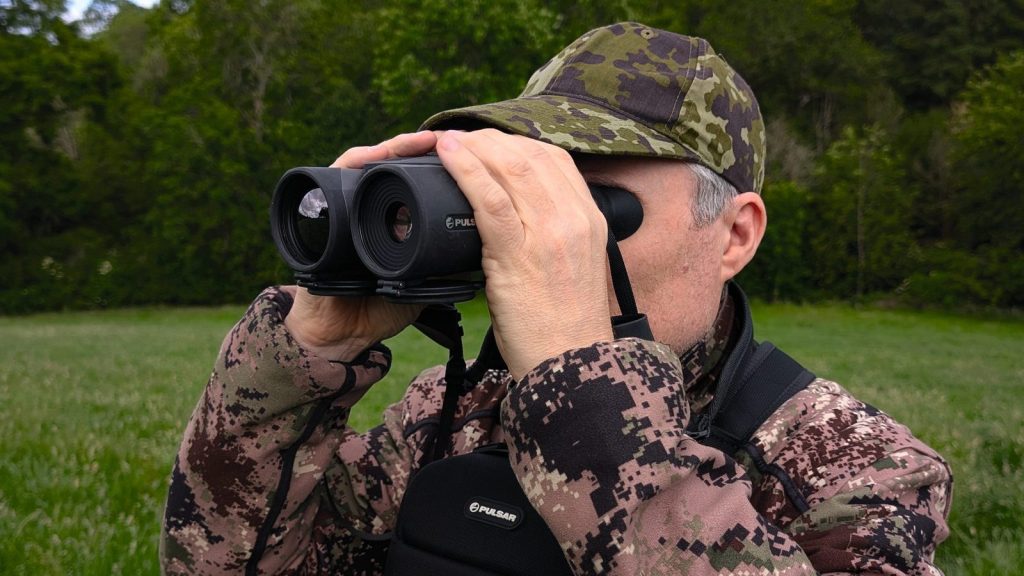
A European thermal maker that cannot compete with the Chinese electro-optical groups on price has had its answer tested in the field, and the verdict favours the premium strategy. Writing in Sporting Gun, the UK clay and game title, Jules Whicker reviewed the Pulsar Symbion LRF DXR50, the multispectral binoculars from Lithuania’s Yukon Group, by day and night on deer, and called them “the best user experience I’ve ever had with multispectral binoculars by a country mile”, at a UK recommended retail price of £3,779.95.
For the international trade the review is a case study in how a premium brand holds its ticket in a category the Chinese manufacturers have driven down in price. Whicker set the market out plainly: “Pulsar knows that it can’t beat the big Chinese electro-optical conglomerates on price,” so it competes on thermal expertise and ergonomic design.
What the Symbion is, and the category it competes in
Multispectral binoculars combine a thermal channel with a digital day and night channel and, in most current models, a laser rangefinder, so one device replaces a thermal monocular, daylight binoculars and a rangefinder. The Symbion LRF DXR50 pairs a 50mm thermal imager with a 4K digital camera, adds an 850nm LED illuminator with flood-to-spot focus and a rangefinder to 1,500m, and presents both channels on a 1920×1080 AMOLED display, together or in a picture-in-picture window. It weighs 1kg and ships with two APS5 batteries and a twin dock.
Whicker’s reading of the category is that the thermal channel does the work: “In practice, Pulsar’s thermal channel tells you so much that the digital channel deservedly plays a supporting role.” That is where the premium maker’s strength lies, and where the review draws its line against the rivals.
Where the premium strategy wins, and where it does not
On the thermal image, Whicker was direct: “It does thermal notably better than the Chinese units I’ve tried – the image feels more realistic and less AI-enhanced – but delivers nothing special in digital terms.” The day digital channel was good, the night digital “short on range” because the built-in illuminator lacks reach, and by day the tester kept conventional Leica binoculars to hand for detail and colour. He did not regard that as a failing of the type: the digital channel, he wrote, “simply makes the thermal channel more meaningful”.
The second pillar is the user experience, which the review treats as the real differentiator. A tandem focus dial separates thermal and digital focus under the fingertips, a three-position power switch works like a rifle safety, the rubberised buttons can be assigned to either hand through the menu, and the armour “feels tougher, grippier and better integrated than anything I’ve previously tested”. Whicker praised the digital interface as “self-explanatory, clear and somehow still stylish”, with Bluetooth pairing to the Stream Vision apps and a ballistics app that returns a holdover with each range. His only criticism was cosmetic: a black finish where green, bronze or flat dark earth would suit a device used by day as well as by night.
The distribution picture
Pulsar is the consumer brand of Yukon Group, headquartered in Vilnius, Lithuania, and the Symbion reaches the UK market through the distributor Thomas Jacks, with pulsar-vision.co.uk as the brand’s UK contact. The review’s verdict for that market was that the design, construction, controls and carrying solutions “all come together to make a compelling argument to anyone who can afford them that these binoculars are simply the best to buy”. For distributors elsewhere, the significance is that a European premium brand has had its strategy independently tested against the volume producers in a hunting market, and the premium held.
What happens next
The full review, with the specification, the handling notes and the verdict, is on Sporting Gun. Pulsar’s international product information is published through Yukon Group, and the Symbion family sits alongside the brand’s thermal riflescopes and monoculars in a category the trade shows of 2027 will again contest between European and Chinese makers.
Useful links
Sporting Gun – Pulsar Symbion LRF DXR50 review: multispectral binoculars tested, Jules Whicker’s original test
Pulsar – the brand’s UK site, the contact the review gives for the Symbion range
Yukon Group – the Lithuanian parent of the Pulsar brand
Thomas Jacks – Pulsar’s UK distributor
Frequently asked questions
Who makes Pulsar thermal and multispectral optics?
Pulsar is the brand of Yukon Group, headquartered in Vilnius, Lithuania; in the UK the brand is distributed by Thomas Jacks.
How does the Pulsar Symbion compare with Chinese multispectral binoculars?
Sporting Gun’s reviewer found the Symbion’s thermal image notably better, more realistic and less AI-enhanced, than the Chinese units he had tried, with nothing special on the digital side, and rated its handling the best in the type.
What is the UK price of the Symbion LRF DXR50?
£3,779.95 recommended retail at the time of the review, published on 3 October 2026.
Related articles
Pard advances thermal and night vision technology – a Chinese maker’s push into the same category
Expect premium products from Rusan factory – another European optics maker competing on quality
Sellmark acquires INFORCE – consolidation among the optics and accessories groups