Rifles
Spotlight on rifles: inside the global rifle market
The global rifle market is one of the firearms industry's broadest and most specialised sectors, serving hunters, target shooters, pest controllers, professional users and armed forces. It stretches from entry-level rimfires and sporting rifles to modular semi-automatics, precision competition platforms and military systems.
North America remains one of the world’s largest commercial rifle markets, while Europe combines a strong hunting culture with major centres of rifle, ammunition and optics manufacture. Demand across Africa, Australasia, Latin America and parts of Asia is shaped by local game species, access to shooting facilities and widely differing firearms laws.
After the exceptional demand of the pandemic period, parts of the market – most clearly in US retail – have entered a more selective phase. Buyers are comparing products carefully, retailers are controlling inventory and manufacturers are concentrating on platforms with a clear purpose. Accuracy remains fundamental, but weight, ergonomics, suppressor compatibility, optics integration and after-sales support increasingly influence the final decision.
A platform for every discipline
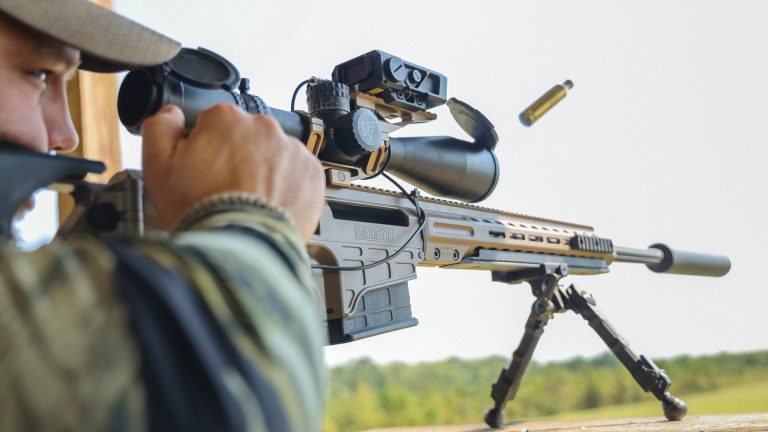
The bolt-action remains the centre of the sporting rifle market. Its strength, simplicity and ability to accommodate everything from economical rimfire rounds to powerful big-game cartridges make it relevant to new shooters, experienced hunters and long-range competitors. Modern production has also brought custom-style features into accessible factory packages.
The boundaries between traditional categories are becoming less rigid. Hunting rifles borrow adjustable stocks and detachable magazines from competition designs, while target rifles are becoming easier to carry in the field. Lever-actions have found a new audience through threaded barrels and modern sights, and straight-pulls continue to appeal where rapid follow-up shots matter.
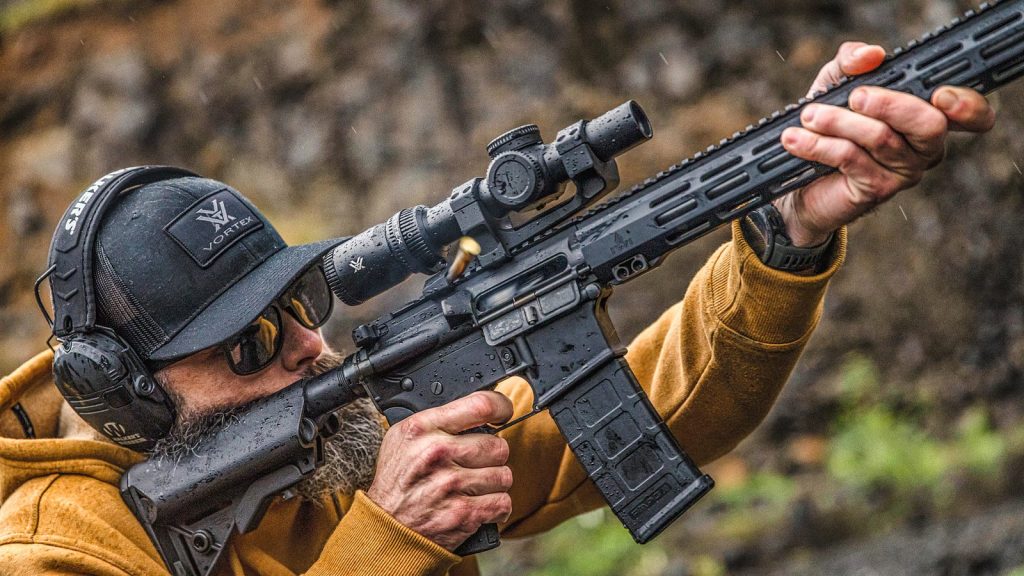
Semi-automatic rifles remain a substantial category, particularly in the United States, but their position varies sharply by jurisdiction. Sporting, practical-shooting and professional requirements have encouraged numerous barrel lengths, chamberings and configurations. This breadth creates opportunities, but makes local knowledge essential: a successful specification in one market may be restricted or irrelevant in another.
Innovation moves into the mainstream
Rifle development increasingly focuses on the complete shooting system. Stiffer receivers and consistent manufacturing tolerances are being combined with stocks and chassis that adjust for length of pull, comb height and grip position. The objective is a rifle that fits its user and mounts naturally behind modern optics.
Weight reduction remains a powerful selling point, especially for mountain hunters. Carbon-composite stocks, carbon-wrapped barrels and carefully machined actions remove weight, while competition models move in the opposite direction, using mass and rigidity to manage heat and recoil. The right rifle is increasingly defined by its task rather than a universal ideal.
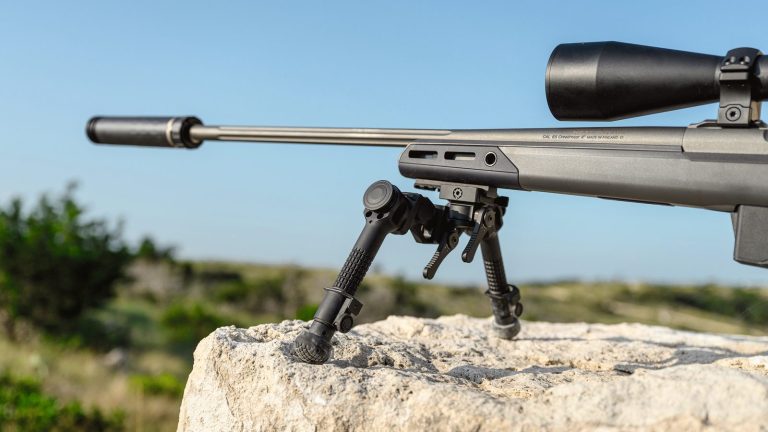
Shorter barrels and factory-threaded muzzles are becoming more common wherever moderators or suppressors are lawful. Designers must balance handling, velocity and sound reduction, but suppression is now considered at the start of development. In the United States, the NSSF identifies suppressor adoption as an important long-term market trend.
Cartridge development is also shaping product lines. Efficient modern chamberings combine strong ballistic performance with manageable recoil, while established calibres retain an advantage in ammunition availability and customer confidence. The commercial challenge is to support innovation without creating short-lived chamberings that leave customers unable to source ammunition.
Environmental requirements remain part of the design conversation. In England, Scotland and Wales, controls on lead projectiles at outdoor ranges became law on 1 April 2026. From April 2028, projectiles containing at least 3 per cent lead may continue to be used only at ranges meeting risk-reduction, record-keeping and notification requirements. In the EU, member states agreed in June 2026 to a proposed restriction on lead gunshot that excludes bullets; at the time of writing, it remained subject to scrutiny before becoming law. National hunting rules and non-lead ammunition still influence barrel twist rates, bullet construction and calibre choice.
The buyer wants a complete system
Today’s rifle customer arrives with more information and higher expectations. Online testing, competition results and video reviews make it easy to compare products before visiting a retailer. Claims are quickly challenged, and a disappointing trigger, awkward magazine or poorly supported proprietary component can damage confidence beyond a single sale.
Buyers are budgeting for the rifle as part of a package. Optics, mounts, bipods, sound moderators, magazines and suitable ammunition may equal the firearm’s cost. Standardised interfaces, common muzzle threads and dependable magazine supply reduce uncertainty and allow retailers to build packages around a customer’s intended use.
Value does not necessarily mean the lowest price. Entry-level buyers want dependable accuracy and an upgrade path; premium customers expect better materials, fit and consistency. Across both groups, warranty response, spare-parts availability and realistic delivery times influence brand choice, particularly when a rifle will be used far from the selling dealer.
This places distributors and retailers in a technical role. Scope mounting, ammunition selection, moderator advice and stock adjustment can transform the ownership experience, while demonstration days help customers understand differences that are difficult to communicate on a specification sheet. Brands that train trade partners and maintain parts support are better placed to earn repeat business.
Market outlook
The rifle market enters the latter part of 2026 with substantial demand but a need for commercial discipline. The latest ATF manufacturing report records 2,823,770 rifles manufactured and disposed of in commerce during 2024, underlining the category’s scale. Yet production capacity does not guarantee retail momentum after several years of volatile purchasing.
NSSF RetailBI data show same-store new-rifle unit sales at 492 US dealers fell 15.4 per cent in 2025; semi-automatics declined 19.9 per cent, lever-actions 13.6 per cent and bolt-actions 7.8 per cent. In a separate sample of 392 large independent retailers, year-end rifle inventory was 10.2 per cent above 2019 levels. These selected US samples suggest continuing stock pressure.
The relative resilience of bolt-actions points to the value of products tied to a clear activity. Hunting, precision shooting and rimfire training extend beyond short-term cycles. Manufacturers are responding with specialised variants, including compact, suppressor-ready hunting rifles, lightweight mountain models, left-handed options and factory rifles designed for precision competition.
Premium products should attract customers who see a measurable improvement in performance, handling or durability. Efficient manufacturing also delivers capable value rifles that bring new participants into the sport. The most difficult space may be the crowded middle, where numerous models share similar specifications and discounting quickly weakens margins.
International growth will depend as much on distribution and compliance as on product design. Calibre availability, proof requirements, magazine limits and hunting law differ widely between countries. Suppliers offering market-specific configurations, dependable documentation and long-term parts support will have an advantage over those selling a single global specification.
Military and law-enforcement procurement is reinforcing interest in modular service rifles, designated-marksman platforms and precision systems. These contracts are separate from the civilian market, but investment in materials, manufacturing, optics interfaces and suppression influences commercial products over time. The strongest rifle brands will combine genuine technical progress with disciplined inventories and support that lasts long after the sale.
Related articles
Ruger acquires assets of Anderson Manufacturing to expand US production – More firearms capacity for the Ruger group.
RSBC Investment Group acquires Steyr Arms – The Austrian rifle maker changes hands.
Blaser Group appoints CEO for US operations – New leadership for Blaser, Mauser, Sauer and Rigby in the US.
Rivolier acquires historic French arms maker Verney-Carron – Consolidation reaches France’s oldest gunmaker.